
Architectural Interiors · Education
Spaces that shape how we learn.
From early learning environments to university campuses, educational facilities must accommodate an increasingly diverse range of activities, technologies and approaches to learning.
Modular architectural interiors offer a different approach to creating these environments — bringing design flexibility, coordinated construction and long-term adaptability together to support the evolving needs of students, educators and institutions.
Learning environments
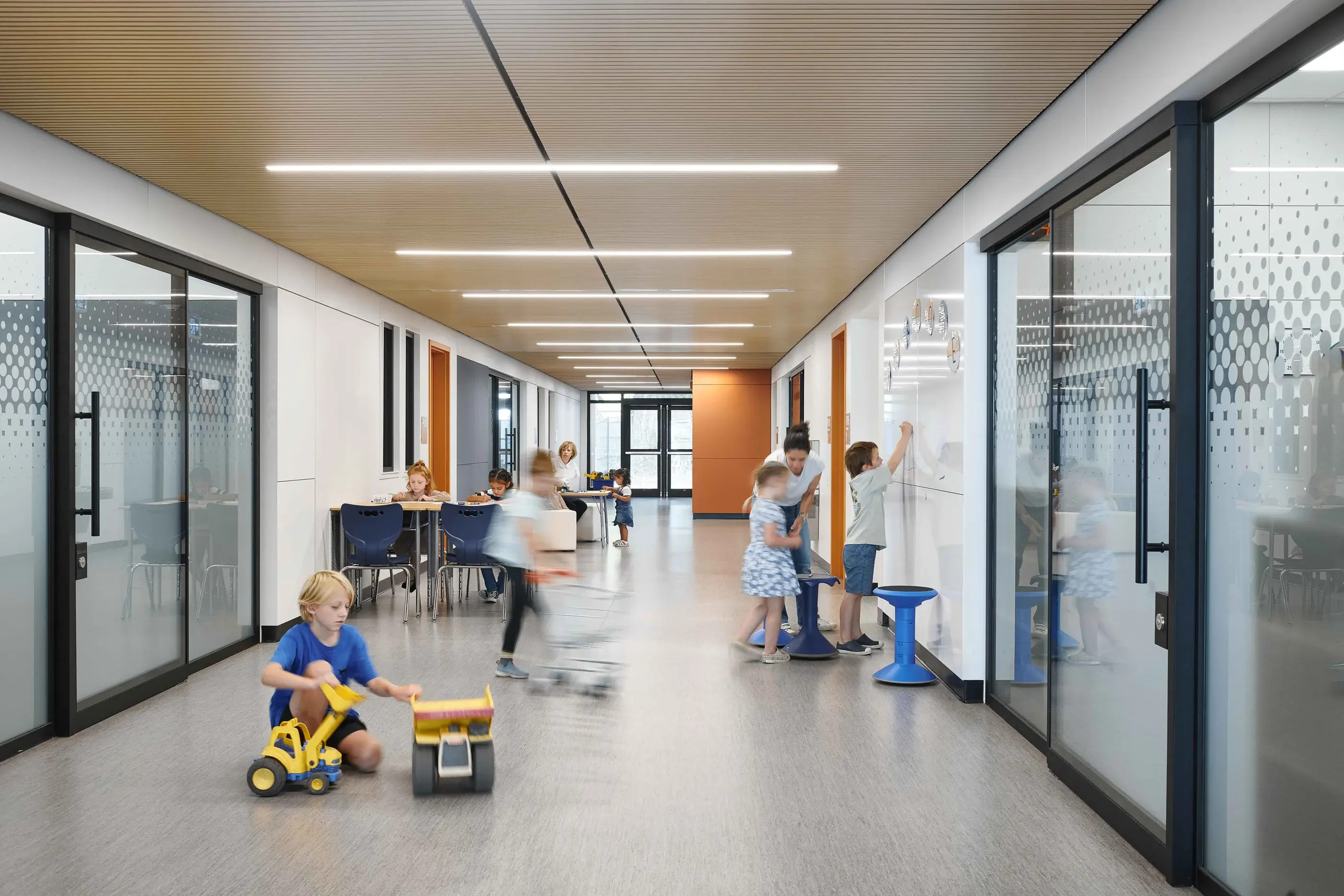
Make room for different ways of learning.
Educational environments must balance seemingly competing needs. Spaces that encourage collaboration and connection must coexist with those that require concentration, privacy and acoustic separation. Visibility and supervision are important considerations, as is the ability to accommodate different teaching methods.
Modular architectural interiors provide designers with a coordinated palette of solid walls, glazing, doors and integrated architectural elements. These can be thoughtfully combined to create distinct learning environments while maintaining a sense of openness and connection throughout a facility.
Architectural expression
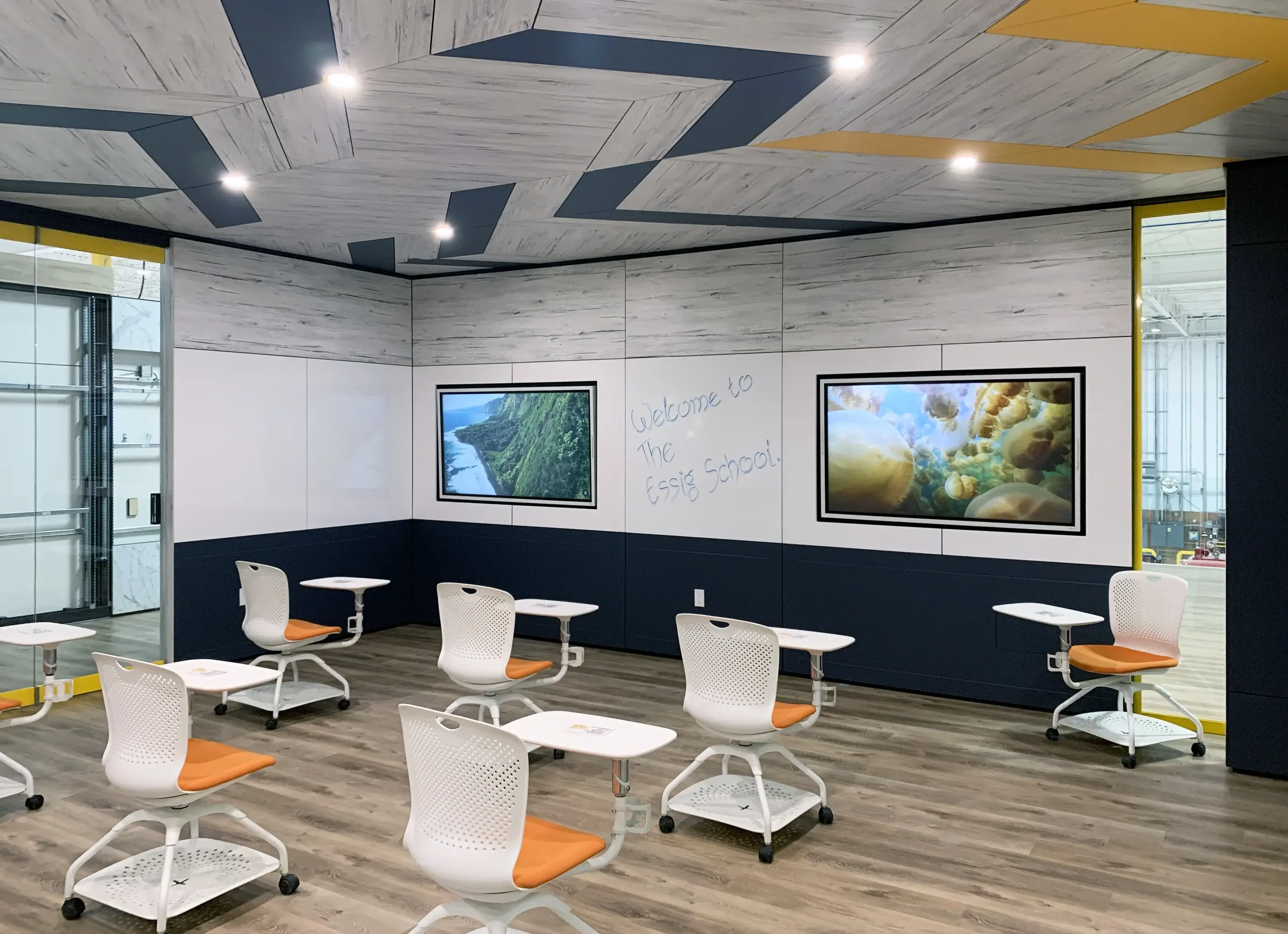
An environment with its own identity.
Educational spaces present unique opportunities for architectural expression. Colour can help distinguish learning areas, graphics can reinforce institutional identity and writable surfaces can transform architectural walls into active teaching tools.
Modular architectural interiors allow these elements to be considered as part of an integrated architectural solution. Through the thoughtful application of materials, finishes, glazing, graphics and technology, designers can create environments that are both purposeful and engaging, reflecting the character of the institution and the communities it serves.
Long-term thinking
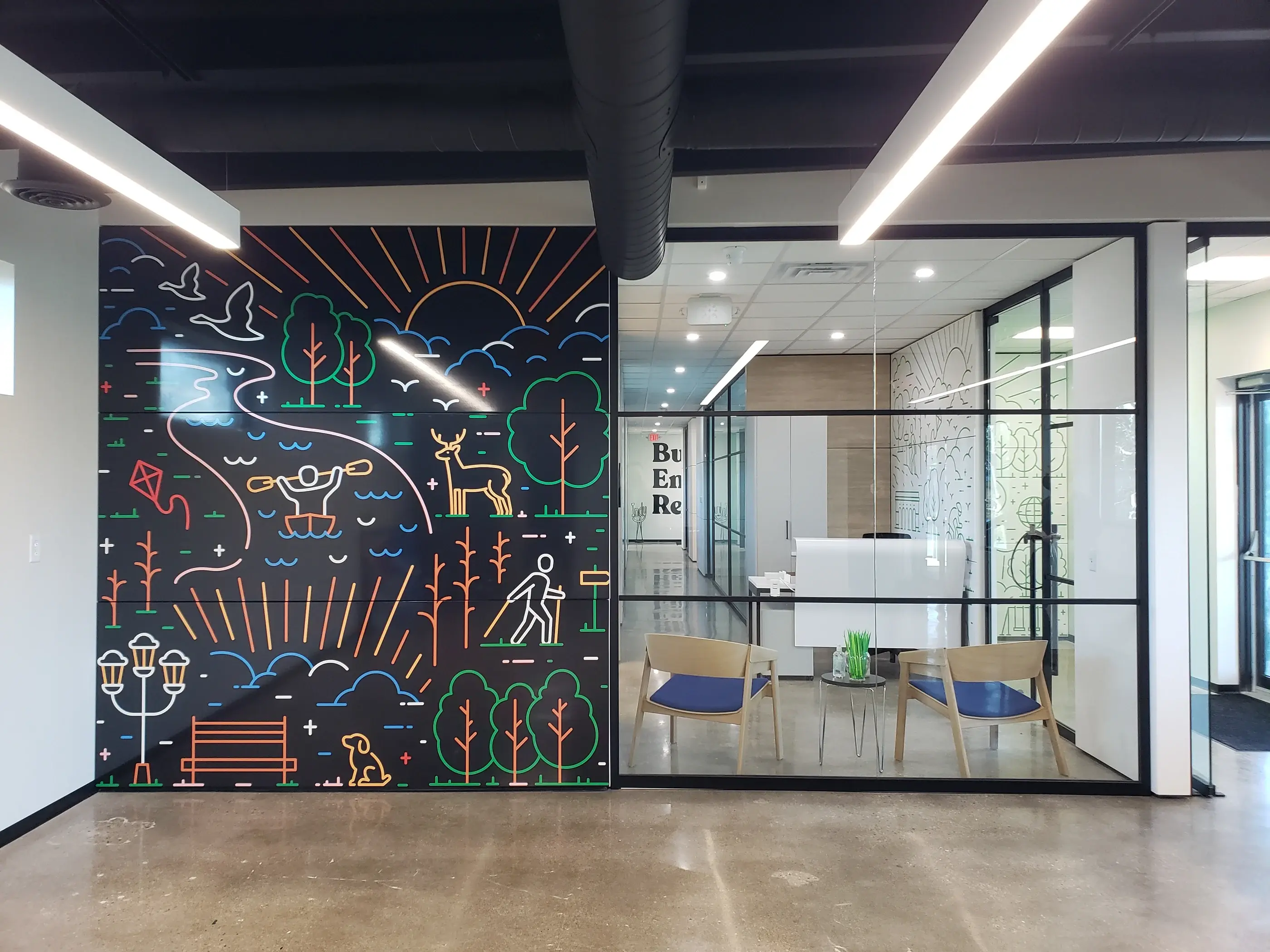
Designed for generations of learning.
Educational institutions take a long-term view of their facilities. The way interiors are designed and constructed today can influence how effectively those spaces serve future generations of students and educators.
Built for everyday use
Educational environments experience considerable daily activity. Modular architectural interiors allow material selection, integrated components and maintenance requirements to be considered together, with opportunities to service or replace individual elements where system configurations permit.
Construction with consideration
Unlike many commercial environments, educational facilities often have limited windows in which construction can take place. Off-site manufacturing and digitally coordinated construction can reduce the amount of work required on-site, helping align installation with academic calendars and minimize disruption to existing learning environments.
Adaptable over time
Enrolment changes, academic programs evolve and new technologies influence how education is delivered. Modular architectural interiors offer opportunities to reconfigure and reuse existing architectural elements, depending on project requirements, helping institutions respond to change while retaining value in their original investment.
Architectural Interiors + Workplace Furniture
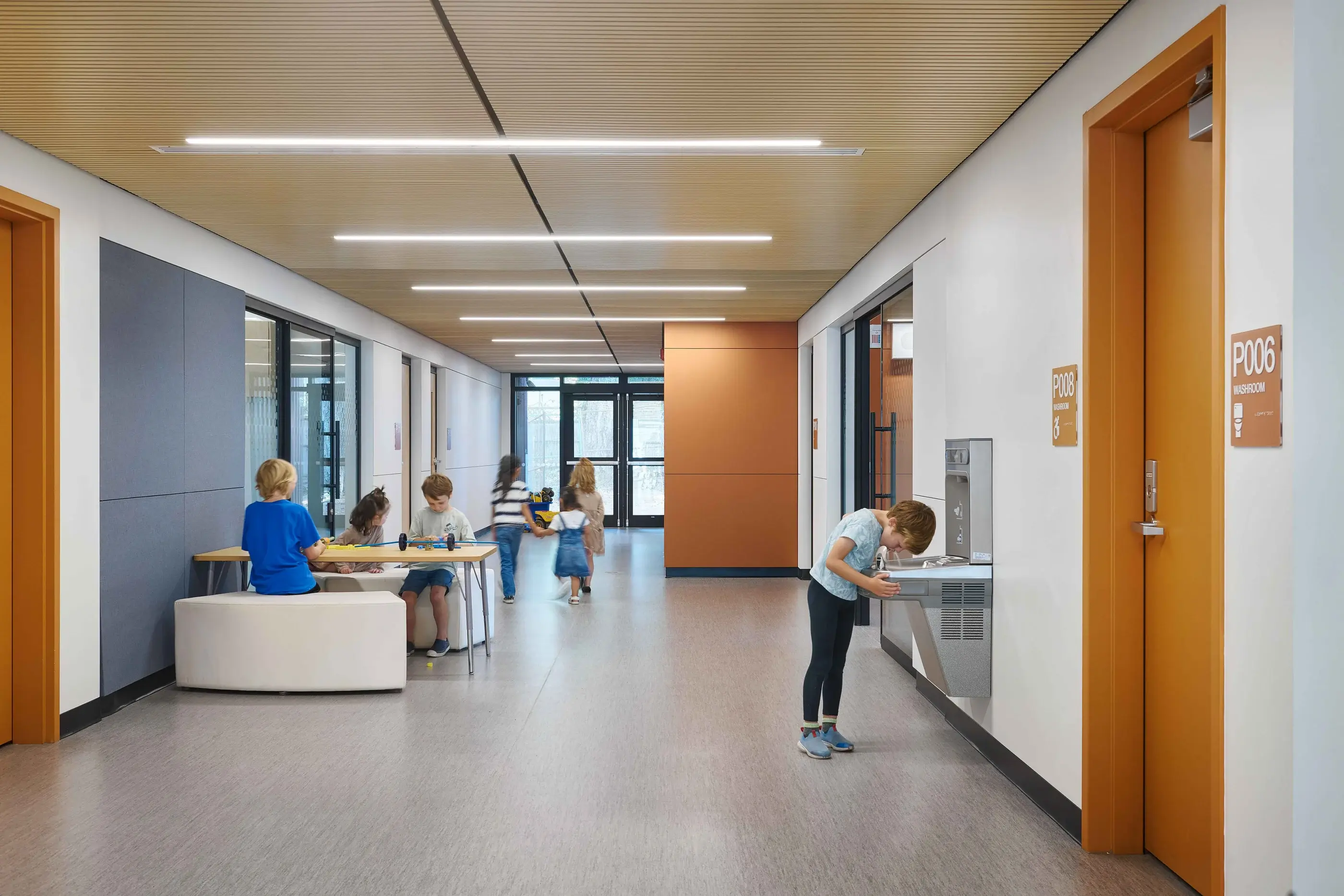
Beyond the classroom.
Creating a complete learning environment requires consideration of both the architecture and the furniture within it.
From classrooms and libraries to faculty offices, student commons and administrative spaces, Blackburn Young brings modular architectural interiors and workplace furniture together to create coordinated environments that support the many activities taking place within educational facilities.
Explore Furniture SolutionsExplore the possibilities
Learning environments in use.
Explore how modular architectural interiors can respond to the diverse functional and design requirements of educational environments.
Planning an education interiors project?
Let's explore what's possible for your next learning environment.